
Delta Flight DL275 Diverted LAX became a widely discussed aviation topic because it involved a long international journey, a major route change, and many questions from travelers who wanted to know what happened in the air. Flight DL275 was operating from Detroit Metropolitan Wayne County Airport to Tokyo Haneda, a long trans-Pacific route that normally takes passengers across the northern Pacific toward Japan. Instead of continuing to Tokyo, the aircraft turned back toward the United States and landed at Los Angeles International Airport. For passengers, the event meant delays, missed plans, and an unexpected stop. For aviation followers, it became a useful example of how airlines handle a technical concern during a long-haul flight.
What Was Delta Flight DL275?
Delta Flight DL275 is a scheduled international service connecting Detroit, Michigan, with Tokyo Haneda in Japan. This route is important because it links a major U.S. hub with one of Asia’s busiest and most important airports. Long-haul flights like this are carefully planned before departure, including aircraft checks, fuel planning, weather review, route planning, crew duty limits, and diversion options. The flight involved an Airbus A350-900, a modern wide-body aircraft used for long-distance travel. The A350 is built for long ocean crossings, passenger comfort, and efficient fuel use, but like every aircraft, it depends on many systems working properly throughout the journey.
Why the Flight Drew Attention
The phrase “delta flight dl275 diverted lax” gained attention because the diversion looked unusual to many people following the aircraft online. When a flight from Detroit to Tokyo turns toward Los Angeles, it naturally raises questions. Why not land in Alaska, Seattle, or another closer airport? Why continue several hours to Southern California? The answer is not always as simple as distance. Pilots and airline operations teams consider weather, aircraft condition, fuel, maintenance support, runway length, passenger handling, crew availability, and safe onward travel. In this case, reports pointed to a technical issue involving the engine anti-ice system, which made the crew choose a safer and more controlled plan.
The Simple Timeline
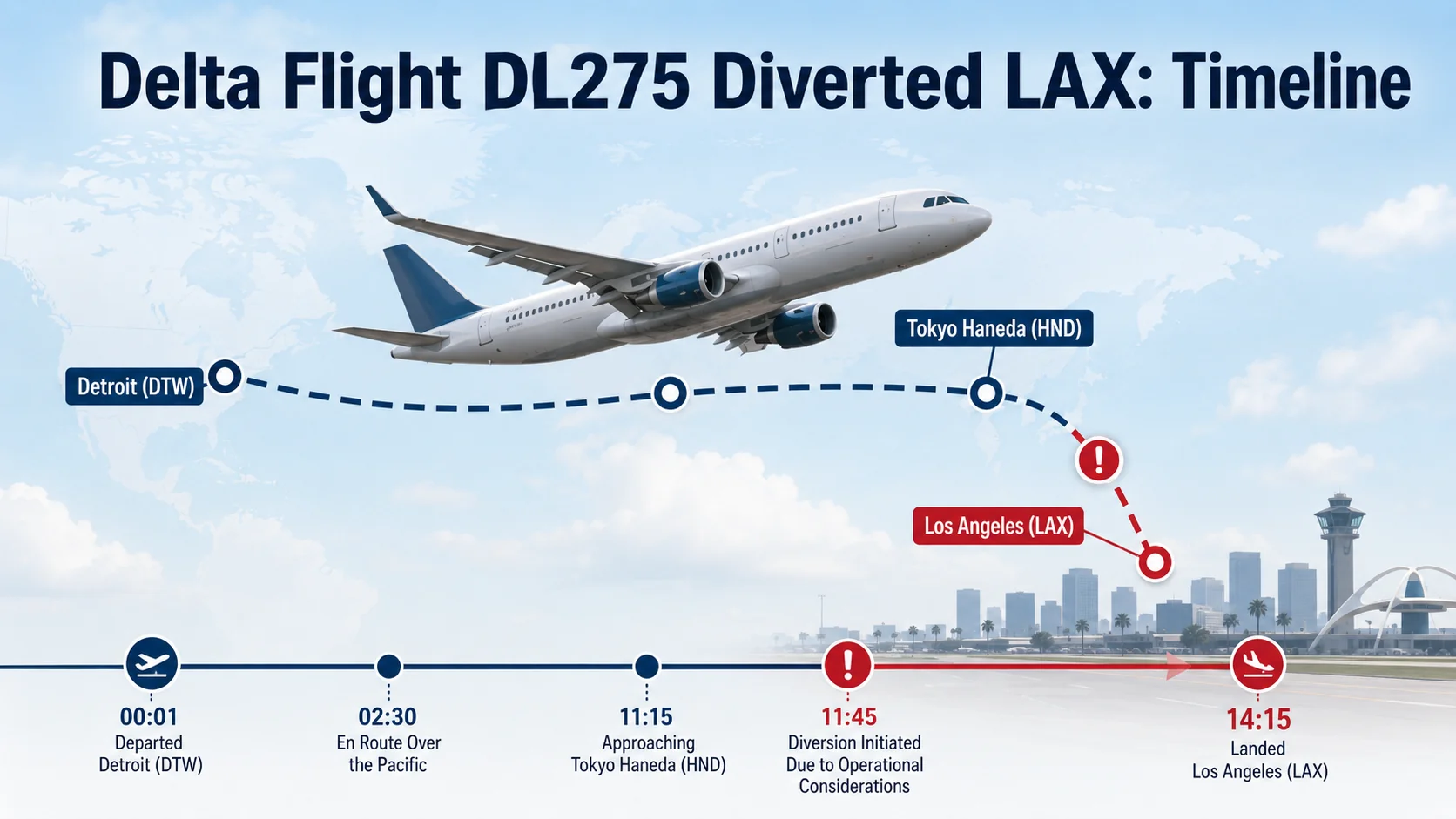
The simple timeline is: • the aircraft departed Detroit for Tokyo Haneda • it continued toward the northern Pacific route • the crew identified a reported engine anti-ice system concern while at cruising altitude • the flight turned back toward the United States and landed safely at LAX. This timeline helps readers understand the event without confusion. The aircraft did not simply make a short turn and land right away. It was already far along its route, which is why the diversion took hours. That long return made the event feel more dramatic, but the safe landing shows that the crew had time to manage the situation carefully.
The Reported Technical Issue
The most repeated detail in aviation reports is that the aircraft had a reported problem with the engine anti-ice system. This system helps stop ice from forming on important engine areas during cold, high-altitude flight. Ice can be dangerous because it may affect airflow, engine performance, and safe operation in certain weather conditions. A problem with anti-ice equipment does not always mean an aircraft is in immediate danger, but it can limit where the plane should fly next. On a route crossing cold northern areas and open ocean, pilots must think ahead. A cautious diversion can reduce risk before conditions become more difficult.
Why Anti-Ice Systems Matter
Anti-ice systems are especially important on long international flights because aircraft often cruise at very high altitudes, where temperatures can be extremely cold. Even when the sky looks calm, moisture and freezing conditions can still create risk in certain areas. Engine anti-ice systems are designed to protect key parts of the engine from ice buildup. When crews receive a warning or notice a fault, they follow strict procedures. They may change altitude, avoid certain weather, or divert to a suitable airport. This is why the DL275 situation should be seen as a careful safety response, not simply as a sudden failure.
Why LAX Was a Practical Choice
Los Angeles International Airport was a practical diversion point for several reasons. LAX has long runways, strong emergency response resources, international passenger facilities, and major airline support. It is also a large airport with experience handling wide-body aircraft like the Airbus A350. For a technical issue on a long-haul flight, the best airport is not always the closest one on a map. The crew and airline operations team may prefer an airport that can inspect the aircraft, support passengers, arrange replacement travel, and handle customs or international travel needs. That makes LAX a logical option in a complex long-haul diversion.
What Happened During the Diversion
After the decision was made, the aircraft continued flying for several hours before reaching Los Angeles. That can sound surprising, but it often means the situation was being managed under control. A diversion does not always mean an immediate emergency landing. Sometimes it means the crew has chosen the safest airport based on the issue, weather, fuel, and aircraft needs. Passengers may have noticed the route change on seatback maps or through crew announcements. For many travelers, the hardest part would have been uncertainty. Still, the main goal was simple: get the aircraft, passengers, and crew safely on the ground.
Landing at Los Angeles
The aircraft landed safely at Los Angeles International Airport on Runway 06R, according to public aviation reports. A safe landing is the most important part of any diversion story. Once the plane reached the ground, airline and airport teams could inspect the aircraft, support passengers, and manage the next steps. No injuries were reported in the public accounts reviewed for this event. The flight’s remaining journey to Tokyo was not completed by the same operation, and passengers had to be moved onto other travel plans. While frustrating, this is common after a technical diversion because the aircraft may need checks before returning to service.
Passenger Experience After Arrival
For passengers, the diversion likely caused tiredness, confusion, and schedule problems. A Detroit-to-Tokyo trip is already long, and being sent to Los Angeles instead of Japan would have added stress. Travelers may have missed hotel bookings, family plans, business meetings, or onward flights. In these situations, airlines usually work to rebook passengers, provide travel updates, and arrange the next available route. The exact support can depend on the airline policy, passenger itinerary, local rules, and available flights. Even when the landing is safe, the passenger side of the story can still be difficult because long delays affect real plans.
Why the Flight Did Not Continue to Tokyo
The flight did not continue to Tokyo because flying deeper across the Pacific with a reported engine anti-ice issue would have added unnecessary operational risk. A long ocean crossing gives pilots fewer nearby landing options compared with flying over land. If weather changed or icing conditions became more likely, the crew would need full confidence in the aircraft systems. Turning toward a major airport with maintenance support allowed the airline to handle the situation in a safer and more controlled way. This decision may have been inconvenient, but it followed the basic rule of aviation: safety comes before schedule.
Was This a Serious Emergency?
The event was serious enough to change the aircraft’s route, but that does not mean passengers were necessarily in immediate danger. Aviation uses caution by design. Many diversions happen because crews detect a problem early and choose not to let it develop into something worse. That is an important difference. A technical fault on a modern aircraft can trigger procedures long before a situation becomes critical. In the DL275 case, the aircraft remained airborne for hours after the diversion decision and landed safely. That suggests the crew was managing a technical concern with time, planning, and support from ground operations.
What Travelers Can Learn From This Event
Travelers can learn that diversions are frustrating but often show that the safety system is working. Pilots are trained to make conservative decisions, especially over oceans and remote areas. Airlines also plan long-haul routes with alternate airports in mind, so crews are not making choices from scratch during an event. If a flight diverts, passengers should listen to crew instructions, check airline updates after landing, save receipts if expenses are involved, and speak with airline staff about rebooking options. The most useful mindset is patience with awareness. A diversion can disrupt a trip, but it is usually done to protect everyone onboard.
Final Thoughts
Delta Flight DL275 Diverted LAX is best understood as a precautionary long-haul diversion linked to a reported engine anti-ice system issue. The flight was supposed to connect Detroit with Tokyo Haneda, but the crew chose Los Angeles after identifying a concern during cruise. The aircraft landed safely, passengers were handled through rebooking, and the event became a talking point because of the long return path and the unusual route change. In the end, the timeline shows how modern aviation handles risk: detect the issue, choose a safer airport, land safely, inspect the aircraft, and move passengers forward as soon as possible.
Frequently Asked Questions (FAQs)
Why did Delta Flight DL275 divert to LAX?
Delta Flight DL275 diverted to LAX after a reported issue with the engine anti-ice system. The crew chose a safer airport with strong support rather than continuing across the Pacific.
Was Delta Flight DL275 flying to Tokyo?
Yes, the flight was operating from Detroit to Tokyo Haneda. It did not complete the planned journey because the aircraft diverted to Los Angeles.
Was anyone injured on Delta Flight DL275?
Public reports about the incident did not mention passenger injuries. The aircraft landed safely at Los Angeles International Airport.
Why did the plane fly all the way to Los Angeles?
LAX offered long runways, major airport services, airline support, and maintenance resources for a wide-body aircraft. The closest airport is not always the best diversion choice.
What is an engine anti-ice system?
An engine anti-ice system helps prevent ice from forming on important engine parts during cold flight conditions. It is especially important on high-altitude and long-distance routes.
Did passengers continue to Tokyo after the diversion?
The original flight segment to Tokyo was not completed after landing at LAX. Passengers were reportedly rebooked onto other flights to continue their journeys.
You might also like: Flight U22238 Emergency Declaration: Passenger Safety Explained