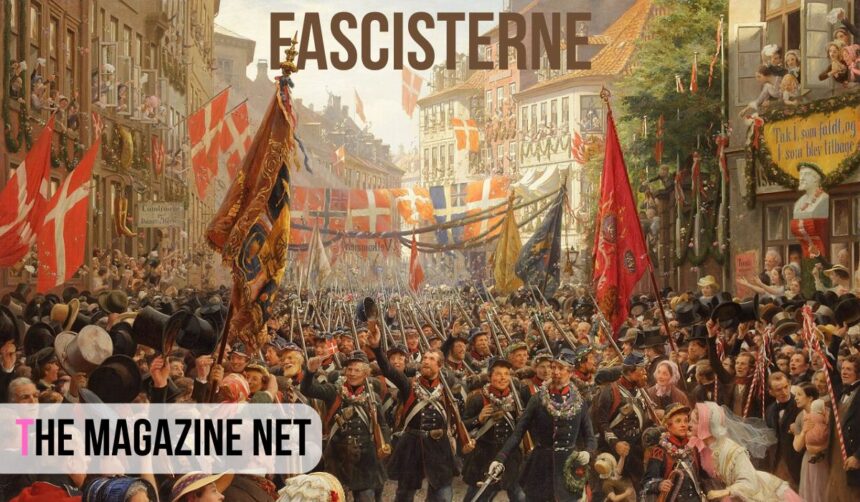
The word Fascisterne may look unfamiliar to many English readers, but it has a clear meaning in several European language contexts. In simple terms, it can be understood as “the fascists.” It is often linked to people, parties, or movements that supported fascism, a far-right political system that grew in Europe during the early twentieth century. The term is not just a label from the past. It carries strong historical weight because fascist movements were tied to dictatorship, extreme nationalism, control of public life, and the rejection of democratic freedoms. To understand Fascisterne, readers need to look at the meaning of the word, where it came from, how fascist groups gained power, and why the term is still used carefully today.
What Does Fascisterne Mean?
Fascisterne is commonly understood as a plural form meaning “the fascists.” It may appear in Danish, Norwegian, or related Scandinavian writing, especially when discussing political history, World War II, authoritarian movements, or groups that supported fascist ideas. The word points to people who followed or promoted fascism rather than to fascism as an abstract idea. Because of that, it often refers to real political actors, party members, supporters, militia groups, or public figures who took part in fascist movements. In English writing, the closest natural translation is “the fascists,” but the emotional tone depends on the context. In a history book, it may be used as a neutral descriptive term. In public debate, it may sound more critical or accusatory.
The Origin of Fascism
Fascism first became a major political force in Italy after World War I. The word itself is linked to the Italian “fascio,” meaning a bundle or group, and to an ancient Roman symbol made of rods tied around an axe. That symbol suggested unity, authority, and state power. Benito Mussolini and his followers used these ideas to present themselves as a movement of national strength and order. Italy had faced economic hardship, political unrest, and disappointment after the war, and fascists used that frustration to gain support. They promised discipline, pride, and stability, but their system relied on violence, censorship, and the weakening of democratic institutions.
How Fascist Ideas Spread in Europe
After fascism rose in Italy, similar ideas spread across Europe during the 1920s and 1930s. Many countries were dealing with poverty, unemployment, fear of revolution, and anger toward weak governments. Fascist leaders used these fears to claim that only a strong leader and a united nation could solve the crisis. They often blamed outsiders, minorities, political opponents, or “internal enemies” for national problems. This message attracted people who wanted simple answers during uncertain times. Fascisterne in different countries did not always look exactly the same, but they shared many themes: loyalty to a leader, hostility to liberal democracy, aggressive nationalism, and the belief that the state should shape society from the top down.
Common Features of Fascist Movements
Fascist movements often presented themselves as modern, energetic, and patriotic. They used flags, uniforms, marches, speeches, songs, and symbols to create a strong group identity. Public image mattered because it helped turn politics into a shared emotional experience. The goal was not only to win elections or pass laws. It was to reshape how people thought, behaved, and related to the state. Fascist groups usually praised military values and treated compromise as weakness. They often attacked free media, labor unions, opposition parties, and independent courts because these institutions could limit the power of the movement or its leader.
Fascisterne and the Historical Role of Power
The historical role of Fascisterne becomes clearer when we look at how fascist supporters helped authoritarian leaders rise. They did not only vote or attend rallies. In many cases, they joined party organizations, spread propaganda, intimidated rivals, and supported laws that reduced civil rights. Some acted as street fighters, while others worked as officials, writers, teachers, police officers, or business allies. This matters because fascist rule did not depend on one leader alone. It required networks of supporters who normalized harsh ideas and helped turn them into daily policy. That is why historians study both leaders and ordinary supporters.
Fascism, Nazism, and Important Differences
Many people use the words fascism and Nazism as if they mean the same thing, but there are important differences. Nazism was the German form of far-right dictatorship under Adolf Hitler and the Nazi Party. It shared many fascist traits, including one-party rule, extreme nationalism, mass propaganda, and contempt for democracy. However, Nazism placed race ideology and antisemitism at the center of its worldview in an especially systematic and destructive way. Fascism in Italy also used racism and imperial violence, but its early identity was not built in the same way as Nazi racial doctrine. Understanding this difference helps readers use the term Fascisterne with more accuracy.
A Simple Way to Recognize Fascist Patterns
For readers who are new to the subject, it helps to understand the patterns rather than memorize every party name. Fascist politics usually grows when fear, anger, and identity are combined with a promise of national rebirth. It often tells people that the nation was once great, has been betrayed, and can be restored only through strength and obedience. One paragraph can briefly sum up the signs often connected with fascist movements:
- extreme loyalty to a powerful leader, rejection of democratic limits, use of fear against minorities or opponents, praise for violence or military discipline, control of media and education, and claims that only one movement represents the “real” nation.
Why Fascisterne Matters in World War II History
World War II made the consequences of fascist rule painfully clear. Fascist and Nazi regimes brought war, occupation, mass imprisonment, forced labor, and genocide. Their actions caused suffering across Europe, North Africa, and beyond. In occupied countries, local fascist supporters sometimes helped foreign powers by joining collaborationist parties, informing on neighbors, or taking roles in puppet administrations. Other citizens resisted these movements through underground newspapers, sabotage, rescue networks, and military action. The word Fascisterne may appear in discussions of this period because it describes people who supported these authoritarian and often violent systems during one of the darkest chapters in modern history.
Fascisterne in Scandinavian and European Context
In Scandinavian writing, Fascisterne may appear when discussing both foreign and local fascist groups. Denmark and Norway, for example, had their own far-right and collaborationist figures during the war years, even though public support varied widely. In broader European context, the term can refer to Italian Fascists, German-aligned collaborators, or later groups inspired by fascist symbols and ideas. Readers should remember that the word is usually shaped by the setting. A school text, museum note, political essay, or news discussion may each use it with a slightly different purpose. Still, the core meaning remains connected to people who support fascist views or movements.
How Language Shapes Public Memory
Words like Fascisterne matter because language shapes how societies remember the past. A single word can carry moral judgment, historical warning, and political meaning at the same time. After World War II, many European countries had to decide how to talk about collaboration, resistance, guilt, and responsibility. Some people wanted to move on quickly, while others argued that forgetting would allow dangerous ideas to return. Public memory is never only about dates and names. It is also about how communities explain the choices people made under pressure. That is why terms connected to fascism are often handled with care in classrooms, media, and public debate.
Modern Use of the Term
Today, Fascisterne may be used in history writing, political commentary, or online discussions. Sometimes it refers directly to historical fascists. In other cases, people use it as a strong insult against modern groups they see as authoritarian, racist, or anti-democratic. This can create confusion. Not every harsh, nationalist, or conservative movement is automatically fascist. At the same time, it is reasonable to study whether a movement uses fascist-style methods, such as glorifying violence, targeting minorities, rejecting election results, or demanding loyalty to one leader above law and institutions. Careful use of the word helps keep discussion fair and serious.
Why the Term Should Not Be Used Carelessly
Because Fascisterne is tied to real violence and historical trauma, it should not be used lightly. Calling people fascists without clear reasons can weaken the meaning of the word and make honest discussion harder. It can also turn debate into name-calling instead of helping people understand real dangers. A better approach is to describe specific actions, beliefs, or patterns. For example, it is clearer to say that a group rejects democratic limits, promotes ethnic hatred, or supports political violence than to use a label without explanation. Strong words are most useful when they are supported by facts and context.
Common Misunderstandings About Fascisterne
One common misunderstanding is that Fascisterne only refers to soldiers or violent street groups. In reality, fascist movements also depended on writers, organizers, officials, donors, teachers, and ordinary citizens who accepted or defended the system. Another misunderstanding is that fascism belongs only to the past. While the original fascist regimes were products of the twentieth century, some modern groups still borrow their symbols, myths, and methods. A third misunderstanding is that fascism is only about strict government control. It is also about identity, emotion, propaganda, and the promise of national rebirth. These features help explain why fascist ideas could attract support even when they damaged freedom.
Final Thoughts
Fascisterne means more than a simple historical label. It points to people and movements connected with fascism, a political tradition built on extreme nationalism, authoritarian rule, and hostility toward democratic life. The term is important because it helps readers understand how dangerous ideas become organized power. Fascist movements did not grow only through speeches by famous leaders. They grew through supporters who spread messages, accepted fear as policy, and treated opponents as enemies of the nation. Learning about Fascisterne is not only about understanding Europe’s past. It is also about recognizing why free institutions, honest debate, and respect for human dignity matter in every generation. When people understand this history clearly, they are better prepared to discuss politics with care, notice warning signs, and protect open civic life.
Frequently Asked Questions (FAQs)
What is Fascisterne in simple words?
Fascisterne means “the fascists.” It usually refers to people or groups that supported fascism, especially in European history and discussions about authoritarian politics.
Is Fascisterne the same as fascism?
No. Fascism is the political idea or system, while Fascisterne refers to the people who support or follow that system. The difference is similar to “socialism” and “socialists.”
Where did fascist movements first become powerful?
Fascism first became a major force in Italy after World War I under Benito Mussolini. It later inspired other far-right movements across Europe during the 1920s and 1930s.
Why is Fascisterne linked to World War II?
The term is linked to World War II because fascist and Nazi-aligned movements played major roles in dictatorship, occupation, war, and repression. Some local supporters also helped collaborationist governments.
Can the word Fascisterne be used today?
Yes, but it should be used carefully. It may describe historical fascists or modern groups that clearly show fascist patterns, but careless use can make the word less precise.
Why is it important to learn about Fascisterne?
Learning about Fascisterne helps people understand how authoritarian movements grow and why democratic rights can be fragile. It also shows the danger of propaganda, fear, and political violence.
You might also like: Mike Wolfe Passion Project Guide