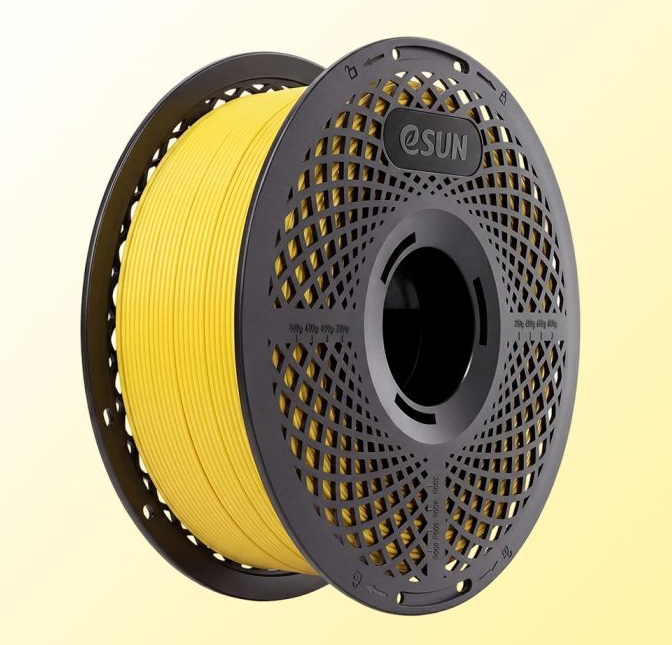
Choosing the right material is one of the most important decisions in 3D printing. The filament you select affects the strength, appearance, durability, and overall quality of your finished models. Among the most commonly used materials, standard PLA and PLA+ are popular options for beginners, hobbyists, designers, and professional manufacturers.
Although both materials are based on polylactic acid, they offer different performance characteristics. Standard PLA is known for its easy printing process and attractive surface finish, while PLA+ is designed to improve certain mechanical properties, including toughness and resistance to breakage. Understanding these differences can help you decide which material is better suited to your next project.
What Is Standard PLA Filament?
Standard PLA is a thermoplastic made from polylactic acid, which is commonly produced using renewable resources such as corn starch or sugarcane. It is widely used in fused deposition modeling because it offers predictable printing behavior and produces detailed models.
One of its biggest advantages is ease of use. Standard PLA generally prints at relatively low temperatures, has limited warping, and works with many desktop 3D printers.
It is particularly suitable for:
- Decorative objects and miniatures
- Architectural and educational models
- Concept designs and visual prototypes
- Personalized gifts and accessories
- General-purpose hobby projects
For projects where appearance, affordability, and straightforward printing matter more than impact resistance, standard PLA is often a sensible choice.
What Makes PLA+ Different?
PLA+ is a modified version of traditional PLA. Manufacturers adjust the material formulation to improve selected properties, particularly toughness and impact resistance.
Unlike standard PLA, which can be relatively brittle, PLA+ Filament is designed to handle more physical interaction without breaking as easily. Depending on the manufacturer, it may also offer improved layer adhesion and consistent extrusion.
For example, eSUN describes its PLA+ as having improved toughness, strong impact resistance, smooth printing, and suitability for functional parts and prototypes.
However, PLA+ is not a standardized material grade. Its exact characteristics depend on the manufacturer’s formulation, so checking individual technical specifications is important.
PLA+ vs. Standard PLA: Key Differences
1. Strength and Impact Resistance
Standard PLA offers good rigidity and works well for many everyday models. However, it may crack when exposed to sudden impacts.
PLA+ is formulated to provide better toughness and impact resistance. This makes it more suitable for components that may be dropped, handled frequently, or exposed to minor mechanical stress.
2. Surface Quality
Both materials can produce attractive finishes and detailed models.
Standard PLA is particularly useful for decorative printing, while PLA+ can deliver similarly smooth results with additional toughness. The final appearance depends on filament quality, temperature, cooling, and printer calibration.
3. Printing Convenience
Standard PLA is popular among beginners because it generally requires minimal adjustments.
PLA+ also maintains convenient printing characteristics, although some products may require slightly different temperatures or speeds. Following the manufacturer’s recommendations helps prevent printing problems.
4. Cost Considerations
Standard PLA is often more affordable, making it attractive for large projects and repeated printing.
PLA+ may cost more because of its modified formulation. However, the additional cost can be worthwhile when improved durability reduces the need to replace broken models or reprint functional components.
5. Application Flexibility
Standard PLA is suitable for general-purpose printing, creative designs, and visual prototypes.
PLA+ provides additional flexibility for projects where improved toughness is important, including functional prototypes, cosplay accessories, mechanical parts, and customized components.
Which Material Is Better for Different Projects?
The best material depends on what you intend to create.
| Project requirement | Recommended material |
| Decorative models | Standard PLA |
| Educational projects | Standard PLA |
| Affordable prototypes | Standard PLA |
| Functional components | PLA+ |
| Impact-resistant models | PLA+ |
| Frequently handled objects | PLA+ |
| Detailed creative designs | Both |
| Customized accessories | Both |
If your project mainly involves visual appearance and simple designs, standard PLA may provide everything you need. If durability and resistance to breakage are priorities, PLA+ is generally the more suitable option.
Printing Tips for Better Results
Regardless of the material you select, proper printer settings are essential for achieving consistent results.
Check the printing temperature: Different manufacturers recommend different temperature ranges. For example, eSUN PLA+ recommends an extruder temperature of approximately 210–230°C and a heated bed temperature of 45–60°C.
Prepare the printing surface: Keep the build plate clean and properly leveled to improve first-layer adhesion.
Adjust printing speed: Start with the manufacturer’s recommended settings and avoid increasing speed beyond what your printer can handle consistently.
Store filament properly: Moisture can affect extrusion quality. Keep spools in sealed bags or dry containers with desiccant.
Test before large prints: A small test model helps identify suitable temperature, cooling, and speed settings before using large quantities of material.
Why Consider eSUN PLA+ Filament?
For users interested in improved toughness and convenient printing, eSUN offers an enhanced PLA+ formulation designed for different 3D printing applications.
Its product features include a 1.75 mm filament diameter, a 1 kg spool, and more than 40 color options. eSUN also highlights smooth extrusion, reduced warping, fewer clogging issues, and improved resistance to breakage.
The material is suitable for prototyping, creative projects, decorative products, and selected mechanical applications.
You can explore the available colors, technical specifications, and recommended printing conditions on the official eSUN PLA+ Filament product page.
Conclusion
Both standard PLA and PLA+ offer valuable benefits for modern 3D printing. Standard PLA is an excellent choice for affordable, detailed, and easy-to-print models, while PLA+ provides improved toughness and impact resistance for projects that require additional durability.
The right decision depends on your budget, printer capabilities, and intended application. By understanding the differences and selecting a suitable material, you can improve print quality, reduce unnecessary failures, and achieve better results across your 3D printing projects.