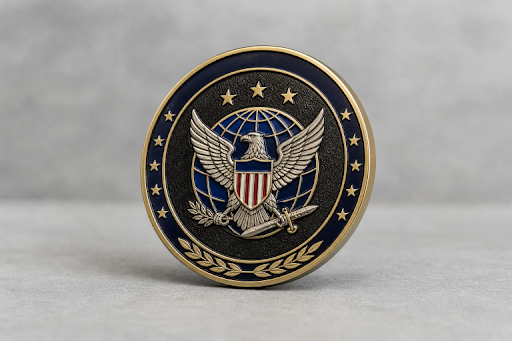
A memorable challenge coin starts with a message, not a collection of decorative ideas. Before choosing metal finishes, colors, or artwork, decide what the coin should represent and what recipients should feel when they hold it. For early concept work, AI challenge coin designer guidance from Challenge Coin Country can help teams explore layouts, prompts, and themes before production. Challenge Coin Country is a custom challenge coin company in Spring Branch, Texas, with experience helping military, public safety, corporate, and commemorative clients turn rough concepts into artwork that can be manufactured in metal.
The best results usually come from a focused process: identify the purpose, understand the audience, select meaningful symbols, simplify the layout, and review every detail before approval. A coin may be small, but it can carry a surprising amount of history, pride, gratitude, or shared identity.
Start With the Coin’s Purpose
Write the coin’s purpose in one sentence before anyone begins drawing. “Recognize graduates of the 2026 leadership class” is more useful than “make a coin for the team.” Purpose determines tone. A retirement coin may feel formal and reflective, while a fundraiser coin may be energetic and welcoming. The long-standing military tradition of marking unit pride, achievement, and special occasions shows why a coin should connect to a genuine experience rather than simply display attractive artwork.
Design for the People Who Will Receive It
Think about the people who will receive, carry, trade, or display the coin. List shared references that matter to them, such as a unit emblem, local landmark, class number, mascot, service phrase, project name, or anniversary. A professional group may value restrained colors and a clean seal-like design. A school club or community event may respond better to brighter colors and more personality. Familiarity matters, but include one distinctive detail that makes the coin feel specific to that group.
Choose Meaningful Symbols
A coin tells its story fastest through its central image. Choose one primary symbol, then add supporting details only when they reinforce that idea. An emblem, animal, vehicle, tool, building, or landscape can work well if recipients recognize its connection immediately. Avoid symbols with vague meanings or associations that could be misunderstood outside the group. If two images compete for attention, decide which one matters most and remove or reduce the other.
Build a Simple and Balanced Layout
Give each side of the coin a job. The front might feature the main emblem and short motto, while the reverse carries a date, event name, mission phrase, or secondary image. Keep the strongest visual element near the center. Use the outer ring for concise text or a border pattern, and leave breathing room around raised lines and letters. Empty space is not wasted space. It makes the design easier to read and gives metal details room to stand apart.
Keep Text Clear and Concise
Coin text should be edited more aggressively than text on a flyer or web page. Use a short motto, official name, year, location, or milestone. Remove repeated wording and filler phrases. Select simple letterforms with enough thickness to remain legible, then inspect the design at approximately the size of the finished coin. Proofread names, abbreviations, dates, punctuation, and capitalization carefully. A single incorrect rank, year, or organization name can undermine an otherwise thoughtful keepsake.
Use Digital Tools Wisely
Digital design tools are useful for brainstorming several directions quickly. They can help a group compare round versus custom shapes, antique versus polished finishes, border treatments, color combinations, and general visual moods. Start with clear design notes that identify the audience, purpose, shape, central image, key text, and desired tone. Treat generated images as rough references. Check every result for misspelled text, distorted objects, inaccurate insignia, and details that would not translate into a physical coin.
Prepare for Physical Production
A screen can hide problems that metal will reveal. Very thin lines may disappear, tiny gaps can fill in, and low-contrast details can blend together after plating or enamel is added. Ask for adequate separation between raised and recessed areas, particularly around lettering and small icons. Consider whether a polished, antique, matte, or dual-metal finish supports the intended mood. A production-ready proof should show both sides, colors, edge treatment, and all text before the order moves forward.
Review the Design Before Approval
Group review is especially important when a coin represents an institution, accomplishment, vessel, facility, or shared milestone. As commemorative coins can mark inclusion in an important event, feedback from the people closest to that meaning can catch omissions or incorrect references early.
- Confirm the coin’s purpose and intended recipients.
- Proofread every word, number, name, and date.
- Verify logos, mottos, insignia, and permissions for protected artwork.
- Review both sides, the edge, finish, and color choices as one complete design.
- Ask at least two members of the recipient group to review the proof.
Apply the Process to Different Groups
- Military unit: Feature the unit emblem, a brief motto, and a founding or deployment-related date.
- Fire department: Pair a department symbol with a local landmark or a concise service phrase.
- Police department: Highlight community, service, trust, or an important department milestone.
- Corporate team: Recognize a completed project, company value, sales achievement, or team anniversary.
- School or club: Use school colors, a mascot, and a phrase members will be proud to keep.
- Fundraiser or event: Include the event year, but make the central artwork meaningful beyond a single date.
Final Thoughts
A strong challenge coin does not need crowded artwork or excessive effects. It needs a clear reason for existing, symbols that recipients understand, text that remains readable, and a thoughtful proofing process. Digital tools can expand the range of early ideas, but human judgment is what turns a promising concept into a coin people will value long after the presentation ends.