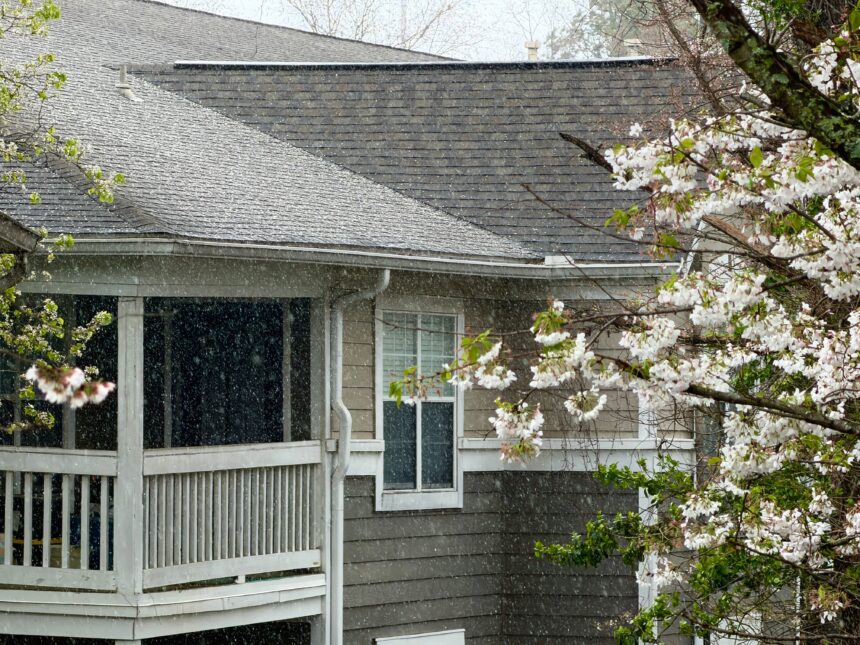
Roof problems often begin quietly. A lifted shingle, a clogged gutter, or a faint ceiling stain may not look urgent, but small issues can turn into expensive damage if water keeps finding a way in. Weather plays a big role in how quickly that happens.
In Portland, long-term climate data shows normal annual precipitation of about 36.9 inches, while the city recorded roughly 35.7 inches in 2025. The same year also brought a 55 mph peak wind gust, conditions that can put extra stress on shingles, flashing, and drainage systems.
That combination of moisture, wind, shade, and seasonal temperature changes can wear roofing materials down before a leak becomes obvious. Catching early signs matters because minor roof damage can spread into rot, insulation problems, and interior water damage surprisingly fast.
Your roof usually gives warning signs before it fails
Roofs almost never go from “perfectly fine” to “catastrophe” overnight. Most problems start with subtle clues that are easy to ignore when life is busy. You might spot a dark patch on a ceiling, granules collecting in gutters, or shingles that look slightly curled at the edges.
Outside, flashing around chimneys and vents often shows wear before the main roof surface does. Inside, a musty smell in the attic can point to trapped moisture. Even a sudden spike in energy bills can hint at roofing or ventilation trouble.
The tricky part is timing. Those signs often show up months before a leak becomes obvious. If you wait for water to start dripping into a bucket, the roof has already won the argument.
Age, materials, and maintenance history all change the equation
A roof’s condition depends on more than what you can see today. Age matters. So does material type. Asphalt shingles, metal roofing, cedar shakes, and membrane systems all age differently and react to Portland weather in their own way.
Maintenance history also tells a big story. A 15-year-old roof that has been cleaned, inspected, and repaired as needed may outperform a 10-year-old roof that has been ignored. The calendar helps, but it doesn’t make the full diagnosis.
If you’re unsure where your roof stands, getting input from a qualified Portland roofing contractor can help you understand whether you’re looking at a simple repair, preventive maintenance, or the early stages of replacement planning.
Small exterior issues can point to bigger hidden damage
You don’t need to climb onto the roof with a flashlight and a false sense of confidence. In fact, that’s a terrible plan. A visual check from the ground often reveals enough to tell whether you should dig deeper.
Look for these common exterior red flags:
– Missing, cracked, or curling shingles
– Moss patches spreading across sections of the roof
– Sagging rooflines or uneven areas
– Rusted or lifted flashing
– Granules washing into downspouts
– Debris packed into valleys and gutters
One issue alone may not mean urgent failure. Several at once usually mean the roof is aging or moisture is already working underneath the surface. Roofing problems love teamwork, and not in a good way.
Interior signs can show up far from the actual roof problem
A lot of homeowners expect roof issues to appear directly under the damaged area. Real life is messier. Water travels. It can move along beams, insulation, or drywall before it finally shows itself on a ceiling or wall.
Pay attention to interior clues such as discoloration, bubbling paint, warped trim, or damp attic insulation. If sunlight peeks through attic boards, water can too. You may also notice mildew smells after heavy rain, especially in upper rooms.
These signs don’t always mean full roof replacement. Sometimes the culprit is flashing, poor ventilation, or a localized section of damage. Still, once moisture gets indoors, speed matters. Building materials are not known for their patience with water.
Repairs make sense in some cases, but not all of them
Many homeowners hope every roof issue can be handled with a quick fix. Sometimes that works. If damage is isolated, the underlying deck is sound, and the rest of the roof still has life left, targeted repairs can be a smart move.
Other situations are less forgiving. If leaks keep returning, if multiple sections are failing, or if the roof is near the end of its expected lifespan, repeated patch jobs often become a money pit. You spend more, worry more, and still end up replacing the roof later.
A practical approach is to compare short-term repair costs against remaining roof life. If the math starts looking silly, replacement may be the more rational choice even if it feels like the bigger leap.
A good inspection should focus on function, not just appearance
A clean-looking roof can still have serious problems underneath. That’s why a proper inspection should go beyond surface appearance. What matters is how the roofing system performs as a whole, including drainage, flashing, underlayment, decking condition, and ventilation.
During an inspection, useful questions include:
– Where is moisture entering or getting trapped?
– Is the issue cosmetic, functional, or structural?
– How much life is realistically left in the current roof?
– Will repairs blend with existing materials?
– Are gutters, vents, and flashing contributing to the problem?
The best assessments give you clear options, not vague warnings. You want a diagnosis with reasoning, not a dramatic speech about doom clouds gathering over your living room.
Prevention costs less than emergency roofing almost every time
Roof maintenance is not exciting. No one brags about clearing gutters at parties. Even so, preventive care usually saves money because it catches vulnerable spots before water reaches the expensive parts of your home.
A solid prevention routine often includes seasonal debris removal, moss control, gutter cleaning, attic ventilation checks, and periodic inspections after major storms. Trimming back overhanging branches helps too, especially in neighborhoods with dense tree cover.
If you plan to sell your home, maintenance records can also help reassure buyers. A roof with documented care tends to inspire more confidence than one with mystery stains and a seller saying, “It’s probably nothing.” Few phrases in real estate are less comforting.
Paying attention now gives you more options later
Roof issues get expensive when they corner you. If you wait until there is active leaking, interior damage, or structural deterioration, your options shrink quickly. You may have to approve emergency work, deal with insurance questions, or scramble during a season when contractors are already booked.
Spotting problems early gives you time to compare recommendations, budget carefully, and decide whether repair or replacement actually makes sense. The National Roofing Contractors Association recommends regular inspections because they can reveal warning signs such as cracked or missing shingles, deteriorated flashing, and interior staining before more serious damage develops. Its roof maintenance guidance is a useful reference for homeowners.
Routine maintenance matters too. FEMA recommends checking roofs for wear, ponding, debris buildup, damaged materials, and drainage problems as part of ongoing property care. Its roof maintenance recommendations also emphasize keeping gutters and drains clear and addressing small areas of damage before they spread.
You don’t need to become a roofing expert. You just need to notice the signals, respect the local climate, and act before a manageable issue turns into a full-scale headache with shingles attached.