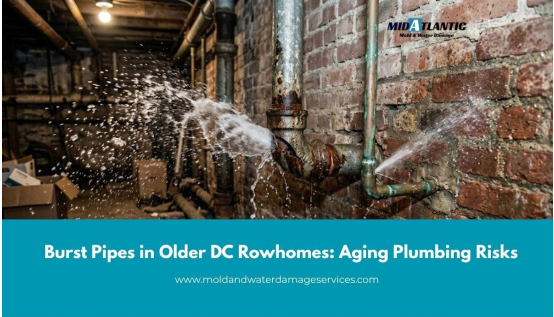
Older rowhomes are one of the defining features of Washington, DC. Their historic character, brick exteriors, narrow layouts, and original architectural details make them desirable, but aging plumbing systems can create serious maintenance challenges. A damaged or burst pipe can release a large amount of water in a short period, affecting floors, walls, ceilings, cabinets, and personal belongings.
For homeowners living in older DC rowhomes, understanding why aging plumbing increases the risk of pipe failures can help prevent costly water damage and allow you to respond quickly when a problem occurs.
Why Older DC Rowhomes Are More Vulnerable to Burst Pipes
Many older properties have plumbing components that have been in service for decades. Although plumbing systems can last for many years, materials eventually deteriorate.
Common factors that increase the risk include:
- Aging pipes:Older metal plumbing pipes can corrode, weaken, or develop small leaks over time.
- Corrosion:Internal corrosion can reduce pipe strength and restrict water flow.
- Mineral buildup:Deposits can accumulate inside older pipes and place additional stress on weakened areas.
- Previous repairs:Multiple repairs or connections may create vulnerable points within the plumbing system.
- Temperature changes:Cold weather can cause water inside pipes to freeze and expand, increasing pressure.
- High water pressure:Excessive pressure can put additional stress on aging plumbing components.
- Hidden plumbing:Pipes located behind walls, beneath floors, or inside ceilings may deteriorate without obvious warning signs.
How a Small Plumbing Problem Can Become Major Water Damage
A pipe does not always fail suddenly without warning. In many cases, homeowners may notice smaller problems before a major break occurs.
Watch for signs such as:
- Discolored or rusty water
- Damp areas around walls or ceilings
- Water stains
- Persistent musty odors
- Dripping sounds behind walls
- Low or inconsistent water pressure
- Unexplained increases in water bills
- Cracks, bubbling, or peeling paint
- Damp flooring near plumbing fixtures
Ignoring these warning signs can allow moisture to spread into building materials. If a pipe eventually breaks, the resulting water release can quickly turn a plumbing issue into a significant restoration project.
What Happens When a House Is Flooded by a Burst Pipe?
A house flooded burst pipe situation can develop rapidly, particularly when the damaged pipe is located inside a wall, ceiling, basement, or utility area.
Water may spread into:
- Hardwood and other flooring materials
- Drywall and plaster
- Ceilings
- Wooden framing
- Cabinets and built-in storage
- Carpeting and rugs
- Electrical components
- Personal belongings
- Basements and crawl spaces
The longer standing water remains inside the property, the greater the opportunity for materials to absorb moisture. Excess humidity can also create conditions that contribute to mold growth.
Why Older Rowhome Construction Can Make Cleanup More Complicated
The compact construction of many DC rowhomes can make water movement difficult to identify. Plumbing may pass through walls, floors, ceilings, and multiple connected rooms.
Some challenges include:
- Water traveling through wall cavities before becoming visible
- Moisture spreading beneath flooring
- Water moving between floors
- Limited access to plumbing lines
- Older plaster or building materials absorbing moisture
- Basement areas retaining standing water
- Hidden moisture remaining after visible water has been removed
Because of these factors, simply drying the visible water may not address the entire problem.
What to Do After a Pipe Bursts
Quick action can help limit the extent of water damage.
Homeowners should:
- Shut off the main water supplyif it is safe to do so.
- Turn off electricityto affected areas if water has reached electrical outlets or equipment, but avoid electrical panels if standing water is present.
- Move valuablesaway from affected areas when possible.
- Remove standing waterusing appropriate equipment if conditions are safe.
- Ventilate the propertywhen weather and safety conditions allow.
- Document the damagewith photographs for insurance purposes.
- Contact a professional restoration provideras soon as possible.
- Avoid disturbing potentially contaminated water, particularly when sewage or other contaminants may be involved.
When You May Need a Burst Pipe Cleanup Service
A professional burst pipe cleanup service can be particularly important when water has spread beyond the immediately visible area.
Professional cleanup may involve:
- Water extraction
- Standing water removal
- Moisture detection
- Structural drying
- Air movement and dehumidification
- Hardwood and flooring assessment
- Drywall and ceiling evaluation
- Moisture monitoring
- Cleaning and sanitizing affected areas
- Evaluation for potential mold growth
The objective is not simply to remove water but to identify and address moisture that may remain inside building materials.
How Water Damage Restoration Helps Older DC Homes
Water damage restoration focuses on returning affected areas to a safe and appropriately dried condition after a plumbing failure or other water emergency.
A professional restoration process may include:
- Inspection:Identifying the source and extent of the water intrusion.
- Water extraction:Removing standing water from floors and other surfaces.
- Drying:Using air movers and dehumidification equipment to reduce moisture.
- Moisture inspection:Checking walls, floors, ceilings, and other materials for hidden moisture.
- Cleaning:Cleaning affected contents and surfaces when appropriate.
- Repairs:Replacing or repairing materials that cannot be salvaged.
- Mold prevention:Addressing remaining moisture that could contribute to mold development.
Why Choose an Experienced Water Damage Restoration Company?
Choosing an experienced water damage restoration company can make the recovery process more organized, especially when damage involves multiple rooms or hidden moisture.
MidAtlantic Mold And Water Damage provides water damage restoration services for homeowners dealing with plumbing-related water emergencies.
The company can assist with:
- Burst pipe water damage
- Emergency water removal
- Flooded basement cleanup
- Structural drying
- Moisture assessment
- Water extraction
- Mold-related concerns following water damage
- Residential and commercial restoration needs
- Insurance claim assistance
Preventing Burst Pipes in Older DC Rowhomes
Although not every pipe failure can be predicted, homeowners can reduce potential risks by taking preventive steps:
- Schedule periodic plumbing inspections.
- Replace severely corroded or deteriorated pipes.
- Insulate vulnerable pipes before freezing temperatures arrive.
- Know where the property’s main water shutoff valve is located.
- Monitor unusual changes in water pressure.
- Repair small leaks promptly.
- Check basements and utility areas for moisture.
- Watch for stains, odors, and other signs of hidden leaks.
- Keep plumbing areas accessible for emergency repairs.
Final Thoughts
Older DC rowhomes offer character and history, but their aging plumbing systems can increase the likelihood of leaks and burst pipes. A relatively small plumbing failure can quickly spread water through floors, walls, ceilings, and other parts of the home.
Recognizing warning signs and responding quickly can help reduce the severity of the damage. If a pipe failure results in standing water or widespread moisture, professional water damage restoration can help with extraction, drying, moisture detection, and cleanup.
For homeowners facing a burst pipe emergency, MidAtlantic Mold And Water Damage provides professional restoration solutions designed to address water damage quickly and thoroughly.