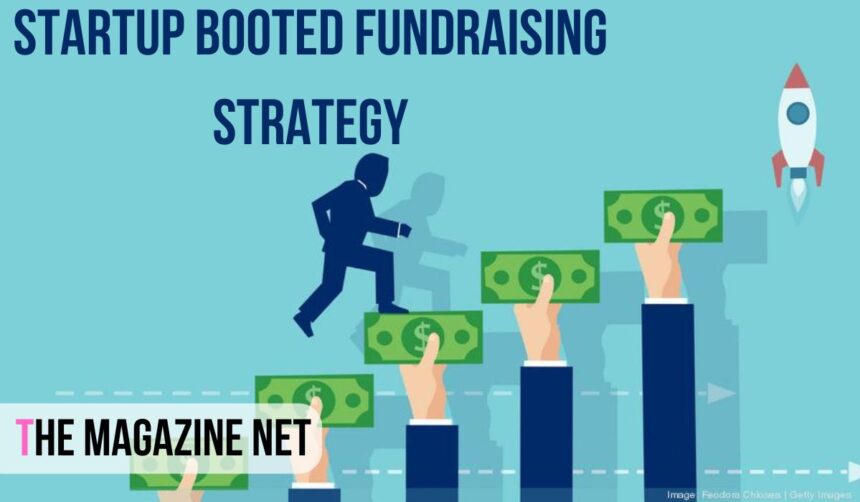
A startup booted fundraising strategy is about building a company with discipline before chasing large outside money. It starts with the idea that a founder can use personal savings, early customer payments, careful spending, small loans, grants, or limited help from people close to the business to move forward step by step. This does not mean the founder must avoid investors forever. It means the business should first learn how to survive, sell, and improve with fewer resources. For many founders in the U.S., the UK, and other markets, this path feels more realistic than raising a big round on day one. It gives the team more time to understand the customer, test the offer, and build a stronger reason to raise money later. It also helps the founder avoid the pressure of growing too fast before the company has a stable base.
What This Strategy Really Means
A booted funding plan is not just “starting with no money.” It is a planned way to use limited capital wisely while keeping the business focused on real demand. Instead of spending heavily on offices, large teams, or broad marketing too early, the founder puts money into the things that prove the business can work. That may include a simple product, customer interviews, a landing page, a small paid test, basic tools, or a service version of the future product. The main goal is to reduce waste. A founder using this approach asks a simple question before every expense: will this help us learn faster, sell sooner, or serve customers better?
Why Lean Growth Fits Booted Fundraising
Lean growth works well with this model because both ideas reward focus. A lean startup tries to find the shortest honest path from idea to customer value. A booted startup tries to reach that path without burning cash too fast. Together, they push founders to build only what matters, charge earlier when possible, and use customer feedback as a guide. This is useful because many young companies fail not only from a lack of money, but from spending on the wrong things before they know what buyers truly want. When growth is lean, every dollar has a job, every test has a purpose, and every decision is linked to learning or income.
Build a Practical Money Map
Before using any startup booted fundraising strategy, founders need a clear money map. This map should show how much cash is available, how much is needed each month, which costs are fixed, which costs can be delayed, and what level of revenue would make the business safer. It should also include a personal risk limit, especially when savings or family support is involved. Founders should not confuse courage with poor planning. A good money map protects the founder from emotional decisions and helps the team know when to pause, adjust, or seek outside capital. A simple money map should track: • monthly operating costs; • expected customer income; • runway in months; • must-have tools and services; • cash gaps that need action.
Validate Before You Spend Too Much
Validation is one of the strongest parts of a lean funding plan. A founder should not wait until the product is perfect to learn whether people care. They can test interest through customer calls, preorders, early demos, small paid pilots, waiting lists, or a manual service that solves the same problem. The point is not to look big. The point is to find proof. If people are willing to pay, give feedback, return for more, or tell others about the offer, the startup has a stronger signal. This proof also helps later if the founder chooses to speak with lenders, grant programs, angels, or venture investors.
Use Revenue as Proof, Not Just Hope
Revenue is powerful because it shows that the market is responding with real money. Even small early sales can teach a founder more than months of guessing. Revenue can reveal which customer group cares most, which price feels fair, which feature solves the most urgent pain, and which sales channel works best. Founders should watch simple numbers such as cash in the bank, gross margin, customer acquisition cost, repeat purchases, churn, payment delays, and support time. These numbers do not need to be complex at the start, but they must be honest. A business that knows its numbers can make better decisions and raise money from a position of strength.
Match Funding to Real Milestones
A strong funding plan should connect each dollar to a milestone, not to a vague hope. A milestone might be the first 50 paying customers, the first profitable month, a working product demo, a signed pilot contract, a new distribution partner, or a clear improvement in customer retention. This keeps the founder from raising or spending money without a reason. It also makes the company easier to explain to partners and backers because progress becomes visible. Instead of saying, “We need money to grow,” the founder can say, “This amount helps us reach this result by this date.” That level of clarity builds confidence and reduces careless spending.
Funding Sources That Fit a Booted Startup
A booted startup can still use more than one type of funding. Self-funding may come from savings or income from another job. Customer funding may come from deposits, subscriptions, preorders, consulting work, or paid pilot programs. Grants can help in some fields, especially when the product supports innovation, community value, clean technology, education, or research. Loans may work when the company has a clear repayment plan and steady cash flow, but they can create pressure if revenue is still uncertain. Friends and family funding can help in the early stage, but it should be handled with written terms and honest risk warnings. The right source depends on the founder’s risk level, business model, timeline, and growth needs.
When Outside Fundraising Makes Sense
Outside fundraising can make sense when the business has proof but needs more speed. For example, the startup may have strong demand, repeat customers, a working product, and a clear plan for using capital. Money might help hire a small team, improve the product, buy equipment, enter a new market, or support a longer sales cycle. The mistake is raising only because competitors are doing it or because it feels like a status symbol. Fundraising should match a real milestone. Founders should know what the money will achieve, how long it will last, what ownership they may give up, and what pressure the new capital will create. Smart capital should make the company stronger, not just bigger.
Protect Control and Make Better Terms
Founder control is one of the biggest reasons people choose this path. When a business grows with customer revenue and careful funding, the founder often keeps more ownership and more freedom over product direction, hiring, pricing, and company culture. Still, control can be lost through rushed deals, unclear loan terms, weak partnership agreements, or giving away too much equity too early. Before signing anything, founders should understand dilution, repayment duties, investor rights, decision rules, and exit expectations. A calm deal is usually better than a desperate deal. The strongest position comes when the business has options, and options come from traction, clear records, and steady cash habits.
Build Investor Readiness While Staying Lean
Even if a founder does not plan to raise money soon, it is wise to build investor readiness early. This means keeping clean financial records, tracking key numbers, saving customer proof, documenting product decisions, and knowing the story behind the business. A simple pitch should explain the problem, the customer, the solution, the market, the business model, current traction, and the next milestone. This preparation also helps with lenders, partners, grant reviewers, and serious customers. In many cases, the act of becoming ready to raise money improves the company even if the founder never raises. It forces clearer thinking, sharper goals, and better discipline.
Keep Costs Low Without Hurting Quality
Lean spending does not mean cheap work, poor service, or a weak product. It means choosing quality where quality matters and cutting costs where customers do not feel the difference. A founder may use no-code tools, shared workspaces, freelance help, automation, open-source software, or simple manual systems before building expensive custom solutions. The key is to protect the customer experience while keeping the cost base light. This approach is especially helpful for service startups, software products, online stores, agencies, and local businesses. When costs stay low, the company has more time to learn, more room to recover from mistakes, and less pressure to accept bad funding terms.
Common Mistakes Founders Should Avoid
The biggest mistake is treating booted growth as a reason to stay small forever. Lean does not mean weak, and careful spending does not mean slow thinking. Another mistake is waiting too long to charge customers, because free users may not reveal true buying behavior. Some founders also underprice their work, ignore cash flow, mix personal and business money, or avoid legal basics because they want to move fast. Others raise too early and lose focus under pressure. A balanced startup booted fundraising strategy avoids both extremes. It uses limited money to create proof, then chooses the next funding step based on facts, not fear.
Final Thoughts
Startup Booted Fundraising Strategy for Lean Growth is a practical path for founders who want control, discipline, and real market proof. It works best when the founder is honest about cash, fast about learning, careful with spending, and open to funding only when it supports a clear goal. This path is not always easy. It can feel slower, and it may require personal sacrifice. But it can also create a stronger business because customers, not hype, shape the company. A founder who can build lean, measure progress, and protect ownership is in a better position to decide whether to keep growing independently or raise money later on better terms.
Frequently Asked Questions (FAQs)
What is startup booted fundraising strategy?
A startup booted fundraising strategy means growing a startup with limited outside funding while using personal resources, early revenue, customer payments, grants, or careful small financing. The goal is to build proof, control spending, and keep more ownership before considering larger investment.
Is bootstrapping better than raising venture capital?
Bootstrapping can be better for founders who want control, slower risk, and a closer link to customer revenue. Venture capital may be better when the market rewards speed, the product needs heavy upfront spending, or the company must scale quickly to win.
How much money does a bootstrapped startup need?
The amount depends on the business model, product type, location, team size, and launch plan. A founder should calculate monthly costs, personal living needs, product expenses, and expected revenue, then keep enough runway to test the idea without panic.
When should a bootstrapped startup raise outside funding?
A bootstrapped startup should consider raising money when it has proof of demand and a clear use for the funds. Good reasons include hiring for growth, improving a product, buying equipment, expanding sales, or serving demand that current cash cannot support.
Can a booted startup use loans or grants?
Yes, a booted startup can use loans or grants if they fit the company’s stage and risk level. Grants can reduce pressure because they may not require repayment, while loans should only be used when the business has a realistic repayment plan.
What is the biggest risk in this approach?
The biggest risk is running out of cash before the business proves demand or reaches steady revenue. Founders can reduce this risk by tracking runway, charging early, cutting weak expenses, testing with customers, and avoiding deals that create pressure too soon.
You might also like: QLCredit Guide: Online Credit, Loan Features, and Smart Tips