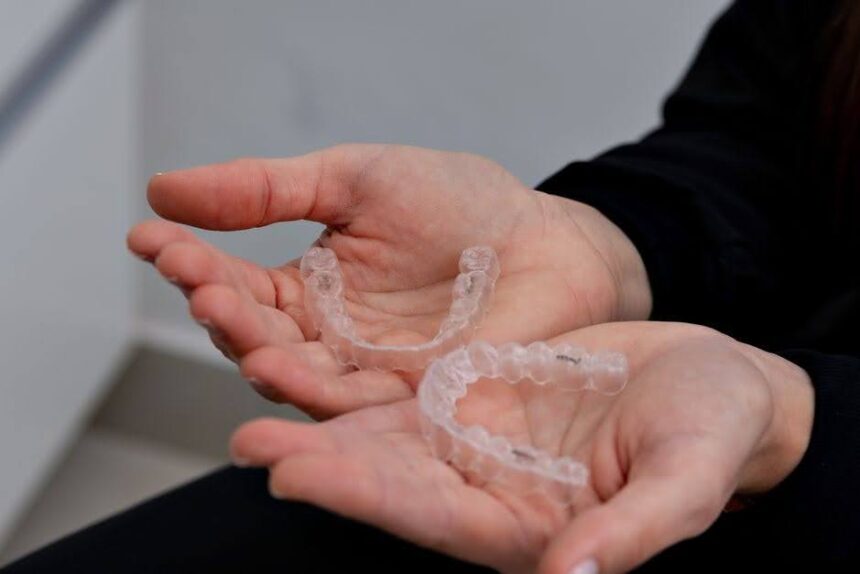
If you’re thinking about straightening your teeth without the obvious look of metal braces, Invisalign probably comes up quickly. Clear aligners are not just a niche option anymore: the American Association of Orthodontists estimates that about 1.91 million adults in the U.S. were in orthodontic treatment in 2024, up from 1.64 million in 2022. Invisalign also notes that about one in three orthodontic patients is an adult, which helps explain why discreet treatment has become so common.
That can be especially appealing in places like Minnetonka, a city of roughly 54,000 residents, where school, work, and social schedules can make lower-profile treatment easier to fit into daily life. Before you commit, though, it helps to understand how clear aligners work, who they suit best, what they cost, and what living with them actually looks like.
How Invisalign Actually Moves Your Teeth
Invisalign uses a series of clear plastic aligners to shift your teeth gradually.
Each set is designed to apply controlled pressure to specific teeth.
You usually wear the aligners for 20 to 22 hours a day and switch to a new set every one to two weeks. The process starts with digital scans or impressions, then a treatment plan maps out each movement. It’s orthodontics with a software upgrade.
Unlike traditional braces, there are no brackets or wires to tighten. That sounds easy, and in some ways it is. Still, the treatment only works if you’re disciplined enough to keep the aligners in. If you tend to forget your water bottle, your charger, and your homework, that’s worth noting.
For many people, clear aligners feel less intrusive, but they still require consistency, check-ins, and patience.
Who’s a Good Candidate and Who May Need Another Option
Invisalign can handle many common orthodontic issues, including crowding, gaps, overbites, underbites, and crossbites. Mild to moderate cases often respond well. More complex tooth movement may still need braces or a hybrid approach
Your age matters less than your habits. Teens and adults both use clear aligners, but success depends heavily on compliance. If you remove them too often or leave them out during the day, treatment can slow down or go sideways.
A consultation helps determine whether your case is a good fit for aligner treatment. If you’re looking for options like Invisalign Minnetonka has plenty of orthodontic providers who can evaluate your smile, explain treatment timelines, and help you decide whether clear aligners are the right choice for your needs.
The key point is simple: not every straightening method fits every mouth. A clean-looking option still needs clinical precision behind it.
The Daily Routine Is Simple, but Not Effortless
One reason people like Invisalign is that it slides into normal life more easily than braces. You can remove the aligners to eat, brush, floss, and take photos without the classic metal-smile cameo. That convenience is real, but so is the routine.
You need to brush after meals before putting the aligners back in. If you snack constantly, the process gets annoying fast. Coffee drinkers run into another issue. Hot drinks and stained trays are not exactly a dream team.
Typical daily habits include:
– Wearing aligners at least 20 hours a day
– Cleaning them regularly with approved products
– Removing them for all meals and most drinks
– Storing them safely instead of wrapping them in napkins
– Keeping up with scheduled orthodontic visits
Losing a tray at lunch is almost a rite of passage. Avoid joining that club.
Cost, and the Fine Print You Should Ask About
The cost of Invisalign varies based on treatment length, complexity, provider experience, and region. In many areas, the total can be similar to traditional braces, though not always. A short cosmetic case costs less than a major bite correction.
When you compare pricing, ask for specifics instead of a shiny headline number. You’ll want to know:
– Whether retainers are included
– How many aligner sets are covered
– What happens if refinement trays are needed
– Whether follow-up visits are part of the quote
– If payment plans are available
Dental may cover part of the treatment, especially if your plan includes orthodontic benefits. Flexible spending accounts and health savings accounts can also help.
You’re not just paying for plastic trays. You’re paying for diagnostics, planning, monitoring, and expertise. That part matters more than many people realize.
Treatment Time Depends on More Than the Official Estimate
A common question is how long Invisalign takes. The answer depends on your case and your consistency. Some people finish in six months. Others need 12 to 18 months or longer.
Official estimates assume you’re wearing the trays as directed. Miss too many hours, and your teeth may not track properly. That can mean delays, additional trays, and a longer finish line. Orthodontic biology is not known for being emotionally available.
Certain movements also take more time than people expect. Rotating teeth, correcting bite issues, or moving teeth vertically can be trickier than closing a small front gap.
You may also need attachments, which are small tooth-colored bumps placed on certain teeth to help the aligners grip better. They’re subtle, but they make the system work more effectively.
Fast treatment sounds great. Predictable treatment is usually the better goal.
What Results Look Like and Why Retainers Matter So Much
Straightening your teeth is only half the story. Keeping them straight is the long game. After Invisalign treatment ends, most people need retainers to prevent teeth from shifting back. Teeth have memories, apparently, and they’re not always helpful ones.
Your orthodontist may recommend full-time retainer wear at first, followed by nighttime wear long-term. If you ignore that advice, relapse can happen gradually, even if your final result looked excellent.
Results also depend on realistic expectations. Invisalign can create major improvements, but perfection is not always the objective. Better alignment, healthier spacing, easier cleaning, and improved bite function often matter just as much as appearance.
Good outcomes usually come from a mix of:
– Accurate diagnosis
– A well-planned treatment map
– Consistent aligner wear
– Regular monitoring
– Long-term retainer use
A straighter smile looks good. A stable, healthy one works better.
How to Make a Smart Decision Before You Start
If you’re seriously considering Invisalign, don’t focus only on the almost invisible look. Think about your schedule, your habits, your budget, and how committed you’ll be once the novelty wears off.
Ask detailed questions during consultations. Find out how your bite will be evaluated, what happens if your teeth don’t move as predicted, and how often you’ll need visits. Clear aligners are discreet, but the decision shouldn’t be fuzzy.
It also helps to compare convenience with accountability. Traditional braces stay on whether you feel motivated or not. Invisalign gives you more freedom, which can be either a major advantage or your personal plot twist.
If you want a straighter smile without brackets and wires, Invisalign can be an excellent option. Just go in informed, because the best results usually come from equal parts technology, planning, and follow-through.