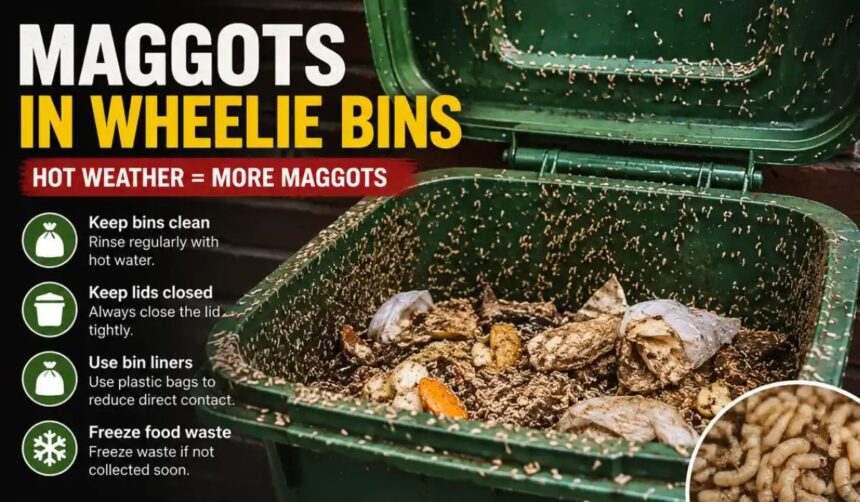
Maggots in wheelie bins can be unpleasant, especially during hot weather. Many people notice them suddenly after a warm spell, a missed collection, or a few days of food waste sitting in the bin. The problem often looks worse than it really is, but it should still be handled quickly. Maggots are fly larvae, and they appear when flies get access to waste and lay eggs. Warm temperatures help those eggs hatch faster, which is why bins can become a problem during summer.
This Maggots Wheelie Bins Hot Weather guide explains why the issue happens, what risks it may bring, and how you can prevent it in a simple way. The main goal is to stop flies from reaching food waste in the first place. Once you understand the cause, bin care becomes much easier. With the right habits, you can keep your outdoor bin cleaner, reduce bad smells, and make your home area more comfortable.
Why Maggots Appear in Wheelie Bins
Maggots usually appear in wheelie bins because flies have found a place to breed. Flies are attracted to food scraps, meat waste, fish, pet food, dirty packaging, nappies, and other damp rubbish. When the bin smells strong, flies are more likely to land on the waste and lay eggs. In warm weather, those eggs can hatch quickly, sometimes in about a day.
The bin itself does not create maggots. The real cause is fly access. If rubbish bags are open, torn, leaking, or not tied tightly, flies can reach the waste. Even a small gap in the bin lid can allow flies to enter. Once the larvae hatch, they feed on the waste inside the bin until they develop further.
Why Hot Weather Makes the Problem Worse
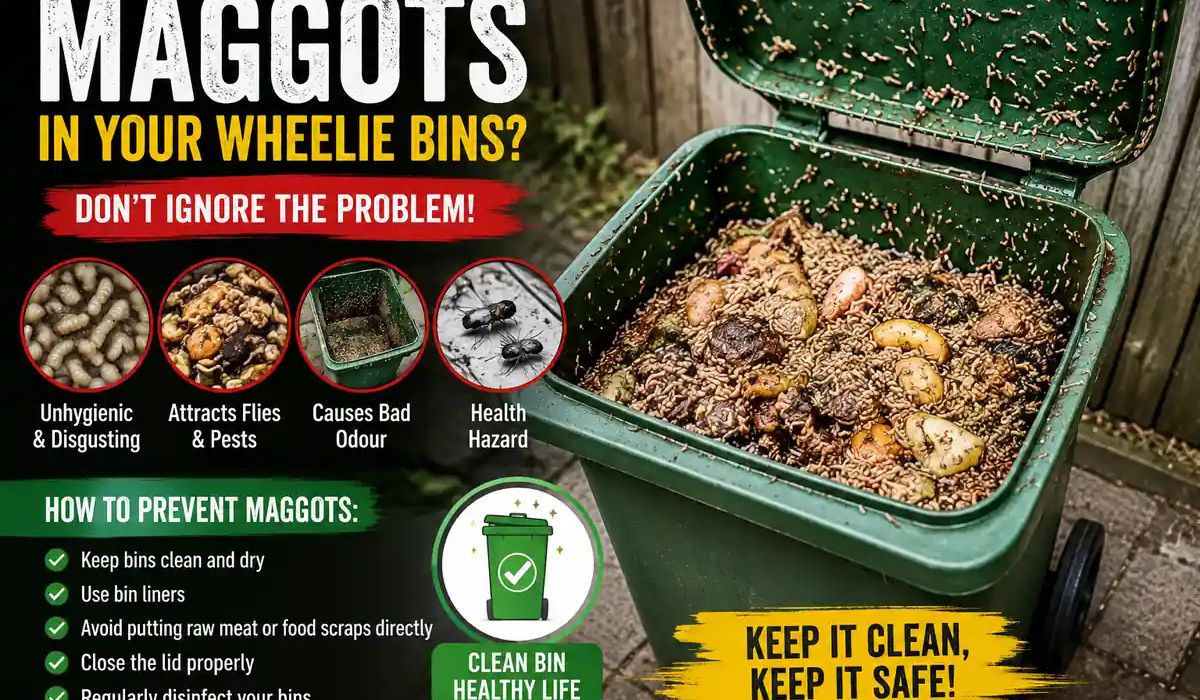
Hot weather speeds up the whole process. Food waste breaks down faster in heat, and that creates stronger odors. These smells attract flies from nearby areas. A bin placed in direct sunlight can become warm inside, making it an ideal place for flies to breed.
Warm conditions also help fly eggs hatch faster. This is why a bin may look normal one day and have maggots the next. During heatwaves or humid days, the problem can grow quickly if food waste is not sealed. Keeping bins cool, dry, and closed is one of the best ways to reduce the risk.
Common Waste That Attracts Flies
Food waste is the biggest reason flies visit bins. Meat, fish, bones, dairy, cooked food, fruit peels, and leftovers can all attract flies when they start to rot. Pet food and animal waste can also become a strong attraction, especially if left loose in a bin.
Packaging can be another hidden cause. Trays from raw meat, takeaway containers, and food wrappers may still hold liquid or smell. If these items are thrown away without being rinsed or sealed, they can draw flies. During hot weather, even small amounts of residue can create a strong smell.
Are Maggots in Wheelie Bins Dangerous?
Maggots in a wheelie bin are not usually dangerous by themselves, but they are a sign that flies have been around waste. The bigger concern is hygiene. Flies can move between rubbish, drains, pet waste, and food surfaces. Because of this, they may spread germs if they get into kitchens or land on uncovered food.
You should avoid touching maggots or dirty bin surfaces with bare hands. Wear gloves when cleaning the bin and wash your hands well afterward. Keep children and pets away from affected bins. The issue is mostly about cleanliness, smell, and pest control, but it should still be treated with care.
What to Do If You Find Maggots
If you find maggots in your wheelie bin, do not panic. Most of them will be removed when the bin is emptied. After collection, clean the bin to remove waste residue and possible eggs. A bin that is left dirty can attract flies again, even if the visible maggots are gone.
For a quick clean, use hot water and a suitable household disinfectant. Scrub the inside walls, corners, lid, and rim. Let the bin dry fully before adding new rubbish. A dry bin is less attractive to flies than a damp one. If the problem is heavy, you may need to clean it more than once.
Safe Cleaning Steps for a Dirty Bin
Cleaning a bin does not need to be difficult, but it should be done safely. Choose an outdoor area where dirty water will not run toward doorways, play areas, or food-growing spaces. Wear gloves, old clothing, and closed shoes. Avoid splashing dirty water onto your skin.
A simple cleaning routine can include: empty the bin first, rinse loose dirt, scrub with hot soapy water, use disinfectant if needed, rinse again, dry with the lid open, and place the bin in shade. This is the only time a short list is needed because the steps are easier to follow in order.
How to Prevent Maggots Before They Start
Prevention is easier than cleaning a full infestation. The most important step is to stop flies from reaching the waste. Tie rubbish bags tightly before placing them in the wheelie bin. If a bag contains meat, fish, nappies, or pet waste, double-bagging can help reduce smells and leaks.
Try to keep food waste out of the main bin until close to collection day if your local system allows it. Use a food caddy with a tight lid indoors, and empty it often. Wipe spills from the kitchen bin and outdoor bin area. Small daily habits can prevent a much bigger summer problem.
Where to Place Your Wheelie Bin in Hot Weather
Bin location matters during warm months. A wheelie bin left in direct sunlight will heat up faster. This can make waste smell stronger and attract more flies. If possible, keep your bin in a shaded area, such as beside a wall, under a shelter, or in a cooler side yard.
Make sure the lid can close properly and is not blocked by overfilled bags. Do not leave bags beside the bin, because they can split and attract pests. If you have more than one bin, leave a little space between them so air can move around. A cooler, drier bin area is easier to manage.
Food Waste Habits That Help
Good food waste habits can make a big difference. Drain wet food before throwing it away. Wrap meat and fish scraps in newspaper or place them in a sealed bag before disposal. Rinse food trays if your local rules allow it, especially trays that held raw meat or seafood.
Avoid putting loose scraps directly into the wheelie bin. Loose waste sticks to the bottom and sides, creating smells even after collection. If you use compostable liners or food waste bags, make sure they are strong enough for the type of waste you are throwing away. Leaks are one of the fastest ways to attract flies.
Bin Lids, Bags, and Odor Control
A tightly closed lid is one of the simplest forms of protection. If your bin lid is cracked, warped, or cannot close properly, flies can enter. Report damaged bins to the proper service if replacement is available in your area. Do not overfill the bin, because a raised lid gives flies easy access.
Odor control also matters. Clean spills quickly and keep the outside of the bin free from sticky residue. Some people use bin powder, baking soda, or a small amount of salt at the bottom of a clean, dry bin to help manage moisture. These steps do not replace cleaning, but they can help reduce smells between collections.
Mistakes That Make Maggots More Likely
One common mistake is leaving food uncovered before bin day. Flies may lay eggs on waste indoors, in a kitchen caddy, or in a rubbish bag before it reaches the outdoor bin. Another mistake is placing warm food waste in the bin. Warm leftovers create steam and moisture, which can increase smells.
People also forget to clean the lid and rim. Flies often land near the top of the bin before entering. If old residue is left there, it can keep attracting them. A clean lid, sealed bags, and a shaded bin spot work together to lower the chance of maggots in hot weather.
Dealing With Smells Around the Bin
Bad smells are often the first warning sign. If your bin starts to smell strong, flies may already be interested. Check for torn bags, leaking liquids, loose scraps, or waste stuck to the bottom. Removing the source of the smell is better than trying to cover it with fragrance.
After cleaning, let the bin dry in fresh air. Moisture keeps odors active and makes the bin more inviting to pests. If the smell returns quickly, review what is going into the bin. Meat, fish, nappies, and pet waste may need extra wrapping during summer. Good sealing is usually more effective than heavy perfume sprays.
When the Problem Keeps Coming Back
If maggots keep returning, look beyond the wheelie bin. Check indoor bins, food caddies, recycling containers, pet feeding areas, and outdoor drains. Flies may be breeding nearby and then moving toward your bin. A nearby source of waste can make the problem continue even when the wheelie bin is cleaned.
You may also need to change your routine during very hot weeks. Empty indoor food waste more often, clean the outdoor bin after collection, and keep the lid shut at all times. If the bin is shared, such as in flats or rental housing, everyone needs to follow the same habits. One open bag can attract flies for the whole area.
Final Thoughts
Maggots in wheelie bins are common in hot weather, but they are preventable. The main cause is simple: flies reach waste, lay eggs, and warm temperatures help those eggs hatch quickly. The best solution is to seal waste, control smells, clean the bin, and keep it out of direct sun when possible.
A clean bin routine protects your home from odors, flies, and unpleasant mess. You do not need complicated products or harsh daily cleaning. Focus on tight bags, dry surfaces, shaded storage, and quick action after collection. With these steps, you can manage Maggots Wheelie Bins Hot Weather problems before they become stressful.
Frequently Asked Questions (FAQs)
Why do maggots appear in my wheelie bin during hot weather?
Maggots appear when flies lay eggs on food waste or other dirty rubbish. Hot weather helps the eggs hatch faster, especially when the bin smells strong or the lid is not closed properly.
Can maggots come from the bin itself?
No, maggots do not come from the bin material. They come from fly eggs laid on waste. If flies cannot reach the rubbish, maggots are much less likely to appear.
What is the fastest way to remove maggots from a wheelie bin?
The fastest way is to wait until the bin is emptied, then clean it with hot water and disinfectant. Scrub the corners, lid, and bottom because waste residue and eggs may remain there.
How can I stop my bin from smelling in summer?
Seal food waste tightly, double-bag strong-smelling items, keep the bin in shade, and clean spills quickly. Let the bin dry after washing because damp surfaces can keep smells active.
Should I keep my wheelie bin in the sun or shade?
Shade is better during hot weather. A cooler bin slows down bad smells and makes the area less attractive to flies. Direct sunlight can heat the waste and make odors stronger.
Are maggots harmful to pets or children?
Maggots in bins are mainly a hygiene concern, but children and pets should be kept away from them. Dirty bins can carry germs, so always use gloves when cleaning and wash your hands afterward.
You might also like: Fascisterne Meaning