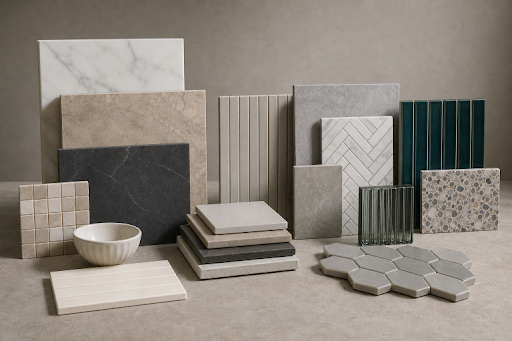
Tile can give a Tulsa home a practical, finished surface in kitchens, bathrooms, mudrooms, entryways, and beyond. The best choice is rarely based on color alone. It should suit how the room handles wet shoes, cooking spills, pets, guests, cleaning routines, and everyday movement. A ceramic tile buying guide for Tulsa homeowners can help narrow the field before a favorite pattern turns into an expensive mismatch.
Think of tile as a system. The material, surface finish, grout, substrate, layout, and installer all influence the final result. When those choices support the way a room is used, the finished space can feel intentional and remain easier to care for over time.
1. Start With the Room
Begin with function. A bathroom floor is exposed to water and bare feet. A kitchen floor may face dropped utensils, food spills, chairs, and frequent mopping. An entry or mudroom may collect grit and moisture after a wet Oklahoma day. Ask how often the room gets wet, how much traffic it receives, who uses it, and how much maintenance fits your household.
These answers narrow the options before design decisions begin. A high-maintenance finish may be appealing in a low-use powder room but less practical in a busy family kitchen.
2. Compare Tile Materials
Common options
- Porcelain: A dense tile option commonly chosen for floors and moisture-prone areas.
- Ceramic: Available in many colors, shapes, and patterns, often used on walls and in suitable residential floor applications.
- Natural stone: Offers natural color variation and texture, but care requirements can differ by stone type and finish.
- Glass: Often used for backsplashes, decorative walls, and accents.
- Mosaic: Useful for detailed designs, curved areas, and shower floors where smaller pieces can follow the slope toward a drain.
Material names are only a starting point. Review the product’s approved uses, finish, care guidance, and installation instructions for the exact tile under consideration.
3. Match Size and Finish to the Space
Tile size changes the visual rhythm of a room. Larger pieces create fewer grout joints and can give a floor or wall a calmer appearance. Smaller tiles add detail, work well around curves and drains, and offer flexibility in compact spaces. A bold pattern can be a strong focal point on a backsplash or powder-room floor without needing to cover every surface.
For finishes, matte tile can be a forgiving choice where water spots and everyday dust are a concern. Glossy tile reflects light well on walls but may reveal smudges more readily. Textured surfaces can add character and traction, although pronounced texture may need more attentive cleaning.
4. Plan for Moisture and Slip Safety
Wet areas deserve early planning, not a last-minute adjustment. Check manufacturer recommendations for bathroom floors, shower walls, laundry rooms, and other locations near regular water exposure. In showers, the tile selection must work with the waterproofing, drainage, and floor slope planned for the space.
Appearance alone does not indicate how a surface will perform under wet feet. Consider a finish with appropriate traction for bathroom floors, and ask whether the stone needs sealing or whether a particular product is intended only for walls. For kitchens, mudrooms, and entries, choose a surface that matches the household’s tolerance for visible dirt and routine cleaning.
5. Choose Grout and Layout Carefully
Grout affects both the look and upkeep of a tiled surface. A close grout color can make the installation feel continuous, while contrast emphasizes the tile shape and pattern. Lighter colors may make marks more visible in heavily used areas, so choose with realistic cleaning habits in mind.
Grout type matters, too. This overview of cement-based and resin-based grout options explains why joint width, tile material, moisture exposure, stain resistance, and installation skill level should all influence the decision.
For layout, stacked tile offers a neat, contemporary grid. Running bond feels more relaxed, herringbone adds movement, and a border or inset can define a smaller area. Plan the layout before installation so narrow cuts do not land in an obvious focal point.
6. Build the Full Budget
The tile price is only one line of the project budget. Include old-floor removal, disposal, subfloor repairs or leveling, underlayment, mortar, grout, trim, sealers when required, delivery, cutting, and labor. Order extra material for cuts, breakage, and possible future repairs.
Compare complete estimates rather than price per square foot alone. A lower-priced product may require more labor when it has a complicated pattern, many small pieces, or difficult cuts around cabinets and plumbing.
7. Test Samples at Home
Showroom lighting cannot duplicate every Tulsa home. Bring home several samples and view them beside cabinets, countertops, paint, existing flooring, and fixtures. Check them in morning, afternoon, and evening light. For a wet-area application, see how the sample looks wet as well as dry.
Look at multiple pieces, particularly with stone, wood-look tile, or patterned products. Variation from tile to tile may be part of the design, and a single sample may not show the full effect.
8. Prepare for Installation
Even an excellent tile can fail when the surface below it moves, holds moisture, or has significant low spots. Before ordering, confirm the floor is suitable for tile and account for added height at doors, appliances, transitions, and cabinets. Large-format tile and detailed layouts often need especially careful surface preparation and planning.
A dry layout can reveal awkward cuts, off-center focal points, and transition issues before mortar is applied. Follow the tile manufacturer’s installation requirements, including any specified underlayment or setting materials.
9. Use a Pre-Purchase Checklist
- Measure the room, alcoves, openings, and transitions.
- Record moisture exposure, traffic level, and cleaning needs.
- Confirm approved locations and care requirements for each tile.
- Select a finish, grout type, grout color, trim, and transition plan.
- Review the installation surface and request a complete estimate.
- Save the product name, color, lot details, and care instructions.
10. Make the Final Choice
The strongest tile choice balances appearance, performance, maintenance, and budget for one specific room. If tile is the only option under consideration, this room-by-room flooring comparison can help frame moisture, traffic, comfort, and durability alongside other flooring materials.
For Tulsa homeowners, the smartest purchase is not necessarily the boldest pattern or the lowest-priced box. It is the tile that fits the room, supports daily life, and still feels right after years of use.